

Where Truth Becomes Record
Every town has a place where questions stop being conversations and start becoming documentation.
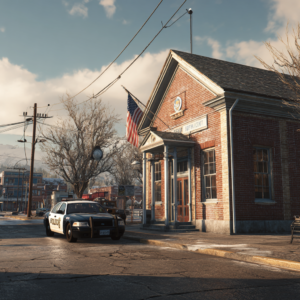
In Willow Creek, that place is the Sheriff’s Station.
It’s not dramatic.
Brick exterior. Fluorescent lights. Desks arranged with quiet efficiency.
But what happens inside that building carries weight.
As I edit these chapters, I’ve been thinking about how different it feels once something becomes official.
A witness statement changes tone when it’s written down.
A suspicion shifts once it’s recorded.
A timeline gains authority once it’s typed and filed.
Documentation doesn’t just preserve events.
It shapes them.
In Samantha Hayes’ world, the station is procedural. Evidence driven. Structured.
In Willow Creek, it is social before it is legal.
Who feels safe speaking.
Who hesitates.
Who trusts the system.
Who does not.
Editing these scenes has been about tightening the space between accusation and confirmation.
Removing excess dialogue.
Sharpening reactions.
Letting the quiet hold more weight than the confrontation.
Because clarity is not always comfortable.
When a truth moves from rumor to record, relationships change.
In small towns, authority does not just resolve mystery.
It defines how that mystery will be remembered.
When something becomes official, it no longer belongs to interpretation.
It belongs to history.
And history rarely feels neutral.
Would you rather live with uncertainty… or with a documented truth?