

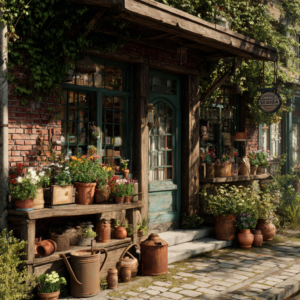
In Willow Creek, even legacy is cultivated
There’s something steady about a nursery.
Rows of labeled plants. Careful watering schedules. Growth that feels intentional rather than chaotic.
Places like that don’t just sell flowers. They teach people what thrives.
In Willow Creek, Bea’s Nursery holds that kind of quiet authority.
It’s where residents go to learn about soil and seasons. But it’s also where they learn something else. Who shaped the town. Which families are spoken of with respect. Which names are repeated with familiarity.
Small towns do not build their hierarchies loudly.
They cultivate them.
Reputation grows the same way plants do. Slowly. Carefully. Reinforced over time.
And once something has been labeled as respected, it becomes difficult to question.
That tension fascinates me as I edit the next Willow Creek book.
Because when something goes wrong in a town like this, suspicion does not move randomly. It moves around established roots.
Samantha Hayes would walk into a place like Bea’s Nursery and ask different questions. Who benefits from being considered untouchable? Who maintains the narrative of respectability?
Claire feels it differently. She feels the warmth first. The history. The pride.
Both responses are true.
But in fiction, the moment someone begins to question a long protected name, the ground shifts.
Legacy can be comforting.
It can also be limiting.
And sometimes, what a town has carefully cultivated is not the full story.
When you think about the places in your own life that shaped you, do you see growth… or influence?